


Campdraft and Challenge Women’s Fashion Trends: Practical, Durable Style for this Competition Season
Women’s campdraft and challenge fashion is shifting toward function-led design. Performance now matters as much as appearance. Riders need clothing that supports movement, handles weather, and maintains a clean presentation in the arena.
Technical fabrics are leading this change. Softshell jackets, stretch denim, and lightweight performance shirts are now standard in many competition wardrobes. These materials offer flexibility in the saddle and durability during long days at events. Breathability is also essential, particularly in warmer Queensland conditions. Moisture-wicking fabrics help maintain comfort without compromising structure.
This is the most common style you’ll see in campdrafting:
- Stretch fabric for full range of movement
- Clean patterns (checks, stripes, geometrics)
- Tailored fit that sits well under a vest or on its own
The Ariat Kirby Pro Shirt is one of the most widely worn styles. It balances structure with stretch, so it looks sharp but still rides comfortably.
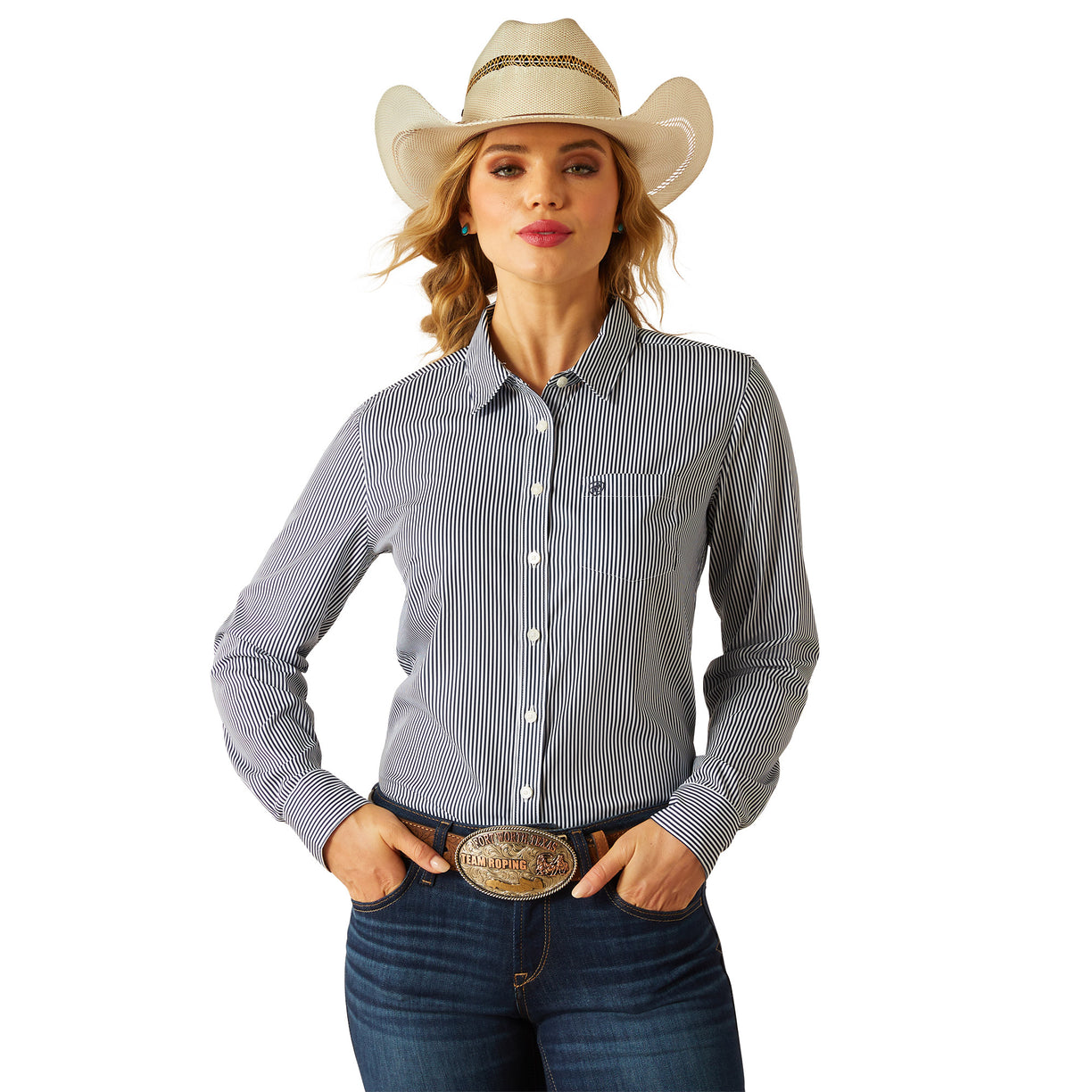
Fit is becoming more considered. Traditional loose layers are being replaced with tailored cuts that reduce bulk. Competition shirts are designed to sit neatly under vests or jackets without restricting arm movement. Women are choosing pieces that contour the body while still allowing full range of motion. This balance is now central to modern campdraft styling.
Colour choices are also evolving. Neutral tones such as black, navy, white, and earthy browns remain popular. These colours present well in the arena and pair easily with existing gear. Subtle patterns and contrast piping are being used to add detail without distracting from a professional look. Bold fashion statements are less common, replaced by clean, functional styling.
![Wrangler Womens Lilly Ls Shirt - Navy [sz:10]](https://www.krsm.com.au/cdn/shop/files/9348537838620_1_150x150.jpg?v=1772894195) Wrangler Womens Lilly Ls Shirt - Navy
Wrangler Womens Lilly Ls Shirt - Navy
This season’s campdraft and rural fashion colour palette is being shaped by a mix of runway influence, lifestyle needs, and the natural Australian environment.
One of the strongest drivers is the broader shift in 2026 fashion toward earth-based neutrals. Browns, clay tones, and warm beiges are replacing cooler greys. These colours feel practical in outdoor settings and align with a more grounded approach to dressing. They also work well across seasons, which suits competition wear that needs repeat use.
Another influence is the rise of soft, nature-inspired greens. Sage, olive, and muted eucalyptus tones are appearing across both fashion and workwear. These shades reflect sustainability themes and blend naturally into rural landscapes. They also pair easily with denim, tan leather, and traditional western styling.
At the same time, there is a clear move toward soft contrast palettes rather than high-contrast colour blocking. Instead of bold, loud combinations, the focus is on tonal dressing. For example, layering cream with camel or chocolate with sand. This creates a clean, professional look suited to arena presentation.
Warm accent colours are also gaining traction. Butter yellow, dusty blush, and muted rust are being used in small details like stitching, trims, or base layers. These tones add personality without overpowering the outfit or clashing with competition standards.
![Wrangler Womens Scarlet Ls Shirt [sz:8]](https://www.krsm.com.au/cdn/shop/files/9348537839177_1_150x150.jpg?v=1772778012)
Wrangler Womens Scarlet Ls Shirt
Weather and practicality also play a role. Queensland conditions favour colours that handle dust, sunlight, and frequent washing. Mid-tones and earthy shades tend to perform better than very light or very dark colours in outdoor arenas.
Western and equestrian heritage continues to influence the palette as well. Traditional navy, white, and tan remain staples because they are timeless and competition appropriate. However, they are now being softened with more modern undertones rather than stark contrast.
Overall, this season’s palette is being shaped by three key forces: modern fashion forecasting, rural practicality, and natural Australian landscapes. The result is a refined mix of earthy neutrals, muted greens, and soft accent tones designed to look polished while still performing in real conditions.
Outerwear is a key focus area. Lightweight jackets and softshell layers are preferred for changing conditions. These garments offer wind resistance and light water protection without excessive weight. Riders are prioritising garments that can transition between early morning runs and warm afternoon conditions.
Footwear continues to centre on durability and safety. Western boots remain standard, with emphasis on comfort, grip, and ankle support. Many riders are selecting boots designed for extended wear across varied terrain. Practical design features are valued over decorative detail.
Accessories remain important but functional. Wide-brim hats provide sun protection while maintaining traditional competition presentation. Gloves, belts, and undershirts are selected for comfort and performance rather than decoration.
Sustainability is also emerging as a consideration. Buyers are looking for garments that last multiple seasons and maintain structure after repeated washing. Quality construction is becoming a key decision factor alongside price and style.
Modern women’s campdraft fashion is defined by practicality, durability, and refined simplicity. It reflects the demands of the sport while maintaining a clean and professional appearance in every run.